
Rebuilding the Jaw to Open the Door to Implants
When teeth are lost and not replaced promptly, the jawbone in that area begins to resorb, gradually losing the height and width it needs to support a dental implant. Ridge augmentation, also called alveolar ridge augmentation, is a bone grafting procedure that rebuilds the deficient area of the jawbone, restoring sufficient bone volume to make implant placement possible. Beyond its functional role, the procedure also restores a more natural contour to the jawline, which can collapse and appear sunken when significant bone loss has occurred.
At Smiles of Punta Gorda, ridge augmentation is an important part of our comprehensive implant treatment planning process. For patients who have been told elsewhere that their jawbone is not adequate to support implants, this procedure often makes treatment possible where it would otherwise not be. Our team evaluates the extent of bone loss using digital X-rays and works with each patient to develop a realistic plan that addresses the deficiency and prepares the jaw for successful long-term implant integration.
Find Out if Ridge Augmentation Is Right for YouWhy Bone Loss Happens and Who Needs Ridge Augmentation
Understanding why the jawbone deteriorates helps patients appreciate why ridge augmentation is often a necessary step before implant placement. The bone that surrounds and supports your teeth is kept alive and dense by the stimulation it receives from the forces transmitted through the tooth roots during chewing and biting. When a tooth is lost, that stimulation stops entirely in the affected area. Without it, the body begins to resorb the bone as it is no longer being used, a process that begins within weeks of tooth loss and continues steadily over months and years.
By the time many patients are ready to pursue dental implants, meaningful bone loss has already occurred. The amount of bone lost and the resulting impact on implant candidacy depends on how long the tooth or teeth have been missing, whether any infection or gum disease contributed to the loss, and the patient’s individual biology and health status. Patients who wore removable dentures for an extended period are particularly likely to have experienced significant bone resorption, as dentures do not transmit stimulation to the bone the way natural roots or implants do. Ridge augmentation addresses this bone deficit directly, creating the solid, healthy foundation that implants require to integrate successfully and function reliably for the long term.
The Benefits of Ridge Augmentation
- Makes Dental Implants Possible – For patients who have been told their bone is insufficient to support implants, ridge augmentation is often the step that makes implant treatment achievable. By rebuilding the bone to an adequate volume and density, it creates the conditions for successful osseointegration and long-term implant stability.
- Restores Natural Jawline Contour – Bone loss causes the jaw to take on a concave, collapsed appearance that can make the face look sunken and prematurely aged. Rebuilding the ridge restores a more natural and youthful contour to the jaw and lower face.
- Improves Denture Fit – Even for patients who are not pursuing implants, rebuilding a resorbed ridge can improve the fit and comfort of removable dentures, which rely on the ridge for support and stability.
- Supports Better Long-Term Outcomes – Implants placed in adequate bone integrate more reliably, last longer, and are less prone to complications than those placed in compromised bone. Ridge augmentation is an investment in the longevity and success of the implant treatment that follows.
The Ridge Augmentation Process at Smiles of Punta Gorda
Ridge augmentation is a surgical procedure that requires careful planning, precise execution, and patient commitment to the healing process that follows. At Smiles of Punta Gorda, we walk you through every step before we begin so you know exactly what to expect from your first consultation through the day your implants are placed.
1
Evaluation and Imaging
We begin with a comprehensive evaluation of the jawbone using digital X-rays to assess the extent of bone loss, the dimensions of the existing ridge, and what volume of bone needs to be rebuilt. This information guides our treatment planning and helps us select the most appropriate grafting material and technique for your specific situation.
2
Anesthesia and Comfort
The procedure is performed under local anesthesia so you remain comfortable throughout. Our oral sedation options are available for patients who want additional relaxation, and our headphones are always on hand if you would like to listen to music during the appointment.
3
Graft Placement
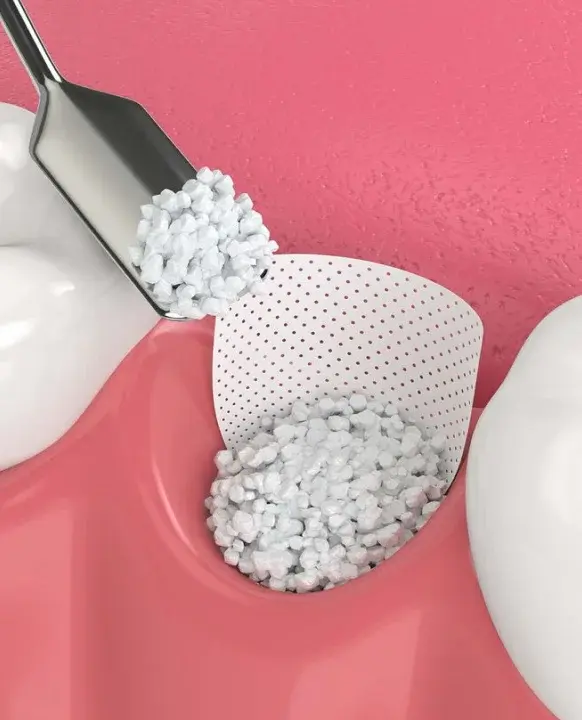
A small incision is made in the gum tissue at the augmentation site to expose the bone surface beneath. Grafting material is placed in the deficient area to rebuild the ridge to the required dimensions. The grafting material used may be your own bone harvested from another area of the mouth, processed donor bone, synthetic bone substitute, or a combination, depending on the size of the defect and the clinical requirements of your implant plan.
4
Membrane Placement and Closure
A resorbable membrane is often placed over the graft material to protect it and guide the growth of new bone. The gum tissue is then carefully sutured closed over the graft site to keep it secure while healing begins.
5
Healing Period
The graft site requires a healing period of several months before implant placement can proceed. During this time, the grafting material gradually integrates with the existing bone and new bone cells grow into the grafted area, creating a solid, well-vascularized foundation. We monitor your progress with periodic X-rays during the healing phase.
6
Implant Placement
Once sufficient bone volume and density have been confirmed, implant placement can proceed. The timeline from ridge augmentation to implant placement varies by patient but typically ranges from four to six months.
What to Expect During Recovery
Recovery from ridge augmentation is generally manageable and follows a predictable course. Some swelling, mild discomfort, and minor bleeding at the graft site in the first few days are completely normal. Here is what to keep in mind during the healing period:
- Follow the soft diet guidelines provided by our team for the first week or two to avoid putting pressure on the graft site
- Take any prescribed antibiotics or pain medications as directed to minimize infection risk and manage discomfort
- Avoid smoking or using tobacco products throughout the entire healing period, as tobacco significantly impairs bone healing and graft success
- Rinse gently with warm salt water as directed to keep the area clean
- Avoid touching or probing the graft site with your tongue or fingers
- Attend all scheduled follow-up appointments so our team can monitor the healing process and confirm the graft is integrating as expected
Most patients find that the initial soreness and swelling resolve within a week or two, after which the healing process continues quietly beneath the surface as the new bone gradually matures.
Insurance and Financing for Ridge Augmentation
Ridge augmentation is generally considered a clinically necessary procedure when it is performed in preparation for dental implant placement, and many dental insurance plans provide at least partial coverage for bone grafting procedures. The extent of coverage depends on your specific plan, and our front office team will verify your benefits and provide a clear cost estimate before treatment begins.
For patients managing out-of-pocket expenses, financing through CareCredit and Cherry is available with flexible monthly payment options. Because ridge augmentation is typically part of a larger implant treatment plan, our team can help you understand the total investment involved and find a financing approach that makes the full plan manageable.
Explore Your Payment and Financing OptionsDo Not Let Bone Loss Prevent You From Getting Dental Implants
If you have been told your jawbone is not strong enough for implants, ridge augmentation may be the solution that makes your implant treatment possible. Contact Smiles of Punta Gorda today to schedule a consultation at our Punta Gorda, FL dental office. Our team will evaluate your bone levels thoroughly and let you know whether ridge augmentation is the right step toward the smile you are looking for.
Find Out if Ridge Augmentation Is Right for YouFrequently Asked Questions
About Ridge Augmentation
Ridge augmentation is a specific type of bone grafting procedure performed to rebuild the alveolar ridge, the bony structure that supports the teeth, when it has lost height or width due to tooth loss or other factors. The term bone graft describes the broader technique of adding bone or bone substitute material to a deficient area. Ridge augmentation is essentially a targeted bone graft focused specifically on restoring the dimensions of the jawbone ridge to support dental implants or improve denture fit.
The surgical procedure itself typically takes one to two hours depending on the size of the area being augmented and the complexity of the case. The healing period that follows, during which the graft integrates and new bone forms, takes several months before implant placement can proceed. We will give you a realistic timeline for your specific situation at your consultation.
The procedure is performed under local anesthesia so you should not feel pain during the surgery. Oral sedation is available for patients who want additional relaxation. Post-procedure soreness and swelling are normal and typically peak within the first two to three days before gradually improving. Most patients find the discomfort manageable with the pain relief medications recommended by our team.
Several types of grafting material can be used for ridge augmentation, and the most appropriate choice depends on the size of the defect and the clinical requirements of the case. Options include autogenous bone taken from another site in your own mouth, which provides the highest biological compatibility; allograft material derived from processed donor bone; xenograft material derived from animal bone that has been processed for safe clinical use; and synthetic bone substitutes. Our team will discuss the most appropriate option for your situation at your consultation.
The waiting period between ridge augmentation and implant placement is typically four to six months, though this varies depending on the extent of the augmentation and how quickly the graft integrates and matures. We monitor your healing with periodic X-rays and will confirm when sufficient bone volume and density have been achieved before proceeding with implant placement.
Yes. When a tooth is extracted and the socket or surrounding ridge is expected to require augmentation for future implant placement, grafting material can often be placed at the same time as the extraction in what is called a socket preservation or ridge preservation procedure. This approach helps maintain the bone dimensions at the extraction site during healing, reducing the extent of augmentation needed later and shortening the overall treatment timeline in some cases.
Yes, significantly. Tobacco use is one of the most important risk factors for graft failure and poor bone healing outcomes. Smoking impairs blood flow to the healing tissue, reduces the body’s ability to fight infection, and slows the regeneration of new bone cells. We strongly advise patients to stop smoking or using tobacco products well before their procedure and to remain tobacco-free throughout the entire healing period. Patients who continue to smoke during healing have a substantially higher risk of graft failure and implant complications.
Ridge augmentation performed as preparation for dental implants is generally considered a clinically necessary procedure and is covered at least partially by many dental insurance plans. The extent of coverage depends on your specific plan details. Our front office team will verify your benefits before your appointment and provide a clear cost estimate. Financing through CareCredit and Cherry is available for any remaining out-of-pocket balance.