
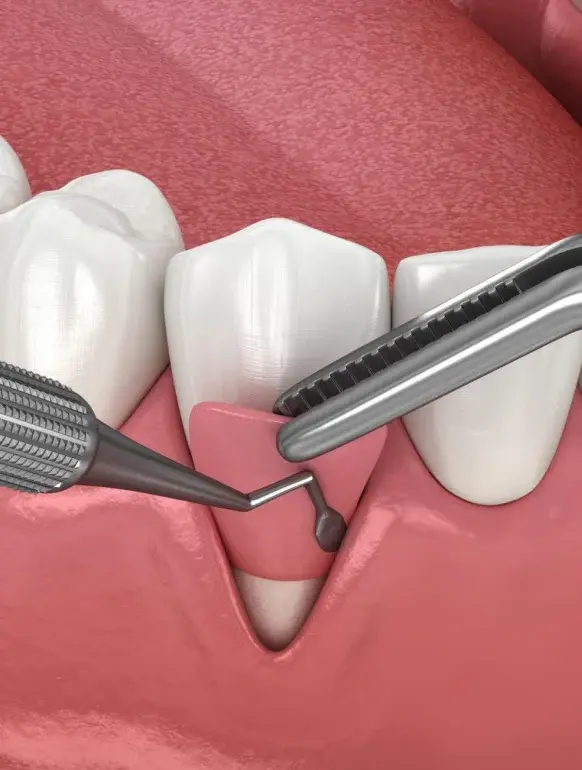
Rebuilding What Recession Has Taken Away
Gum recession is one of the most common and most underestimated threats to long-term oral health. When the gum tissue gradually pulls away from the tooth, it exposes the root surface beneath, a part of the tooth that has no protective enamel layer and is therefore significantly more vulnerable to sensitivity, decay, and structural damage over time. Left untreated, recession continues to progress, and the bone that supports the tooth can eventually become compromised to the point where the tooth itself is at risk.
Gum grafting is the most clinically effective treatment for addressing recession and restoring the protective gumline around affected teeth. At Smiles of Punta Gorda, we use gum grafting to rebuild the gumline, cover exposed root surfaces, eliminate the pain and sensitivity that recession causes, and restore a more natural and aesthetically pleasing appearance to the smile. The procedure is performed with precision and patient comfort as the priority, and the results are both functional and cosmetically meaningful. Many patients are genuinely surprised by how much more comfortable their teeth feel and how much better their smile looks after gum grafting.
Schedule a Gum Grafting ConsultationUnderstanding Gum Recession and Why It Happens
Gum recession rarely happens overnight. It is typically a gradual process that develops over months or years, which is one of the reasons many patients do not notice it until it has already progressed. Several factors can contribute to recession, and in many patients more than one is at play:
- Aggressive Brushing – Brushing with too much force or using a hard-bristled toothbrush is one of the most common causes of gum recession. Over time, aggressive brushing wears away the gum tissue and enamel along the gumline, causing the gums to recede and the teeth to appear longer.
- Gum Disease – Periodontal disease causes the destruction of both the gum tissue and the underlying bone that supports the teeth. As the disease progresses and the attachment between the gum and tooth is lost, the gumline recedes and the root surface becomes increasingly exposed.
- Thin Gum Tissue – Some patients are naturally predisposed to recession due to having a thin gingival biotype, meaning the gum tissue is thinner and more fragile than average. These patients are more susceptible to recession even with good oral hygiene habits.
- Teeth Grinding and Clenching – The excessive forces generated by bruxism place significant stress on the teeth and their supporting structures. Over time this can contribute to gum recession, particularly on the teeth that experience the most grinding pressure.
- Orthodontic Treatment – In some cases, tooth movement during orthodontic treatment can cause recession, particularly when teeth are moved outside the natural boundary of the supporting bone.
- Tobacco Use – Smoking and other forms of tobacco use impair blood flow to the gum tissue, reducing its health, resilience, and ability to maintain proper attachment to the tooth surface.
The Benefits of Gum Grafting
- Relieves Pain and Sensitivity – Exposed root surfaces are notoriously sensitive to temperature changes, sweet foods, and pressure. Covering these surfaces with grafted tissue eliminates or significantly reduces this sensitivity, often providing immediate and lasting relief.
- Protects Against Decay – Unlike enamel-covered crown surfaces, exposed root surfaces have no protective outer layer and are highly susceptible to decay. Covering them with grafted tissue restores a natural barrier that dramatically reduces the risk of root decay.
- Stops Recession From Progressing – Without treatment, gum recession continues to worsen over time. Gum grafting addresses the existing recession and helps stabilize the gumline, preventing further tissue loss and the bone damage that can follow.
- Protects the Long-Term Health of the Tooth – By restoring gum coverage around the tooth root, grafting protects the bone and attachment fibers that keep the tooth stable in the jaw. This is a critical factor in the long-term survival of teeth affected by significant recession.
- Improves the Appearance of the Smile – Receding gums make teeth look unnaturally long and can create a smile that appears uneven or aged. Rebuilding the gumline restores a more youthful, balanced proportion between the teeth and gums.
Your Gum Grafting Procedure at Smiles of Punta Gorda
Gum grafting at Smiles of Punta Gorda is performed with precision and patience, with patient comfort and optimal tissue integration guiding every decision our team makes. Here is a clear picture of what to expect from your first evaluation through your follow-up appointments.
1
Evaluation and Treatment Planning
We begin with a thorough examination of your gum tissue, measuring recession levels at each affected tooth and assessing the health of the surrounding bone and tissue. We discuss your symptoms, your aesthetic goals, and the treatment approach that best suits your specific pattern of recession.
2
Anesthesia and Comfort
Local anesthesia is administered to the treatment area so you feel no pain during the procedure. Our oral sedation options are available for patients who want additional relaxation throughout, and our headphones are always on hand if you would like to listen to music while we work.
3
Graft Harvesting or Preparation
Depending on the grafting technique used, donor tissue may be harvested from the roof of your mouth, or processed donor tissue from a tissue bank may be used. The most appropriate source depends on the extent of the recession and the clinical requirements of the case, and our team will discuss this with you at your consultation.
4
Graft Placement
The grafted tissue is carefully positioned at the recession site and secured precisely to cover the exposed root surface and restore the gumline to a healthier level. The placement technique is chosen to maximize coverage of the exposed root while ensuring the grafted tissue has adequate blood supply to integrate and survive.
5
Suturing and Initial Healing
The graft is sutured into place and the donor site, if tissue was taken from the palate, is covered to promote comfortable healing. We place a protective dressing over the treated areas where appropriate.
6
Follow-Up and Monitoring
We schedule follow-up appointments to monitor the integration of the graft, remove sutures when ready, and assess the coverage achieved. Full integration of the grafted tissue takes several weeks, after which the long-term outcome of the procedure can be fully evaluated.
Signs You May Need Gum Grafting
Many patients are unaware of how significant their recession has become until it is identified during a professional examination. Signs that gum grafting may be appropriate include:
- Teeth that appear noticeably longer than they used to
- Increased sensitivity to cold, heat, sweet foods, or pressure along the gumline
- A visible notch or indentation at the base of a tooth near the gumline
- Exposed root surface that looks darker or more yellowish than the enamel above it
- Gums that appear to be pulling back or sitting lower on some teeth than others
- Discomfort when brushing near the gumline of affected teeth
- A previous diagnosis of gum recession from another dental provider
If any of these apply to you, a consultation at Smiles of Punta Gorda will allow our team to assess the extent of your recession and determine whether gum grafting is the appropriate next step.
Insurance and Financing for Gum Grafting
Gum grafting performed to address recession and protect the health of the teeth is generally considered a clinically necessary procedure and is covered at least partially by most dental insurance plans. The extent of coverage depends on your specific plan and the number of teeth being treated. Our front office team will verify your benefits before your appointment and provide a transparent cost estimate so you know what to expect before treatment begins.
For patients managing out-of-pocket expenses, financing through CareCredit and Cherry provides flexible monthly payment options with a straightforward application process.
Discover Our Flexible Payment OptionsProtect Your Teeth and Restore Your Gumline
If receding gums have been causing you sensitivity, affecting the appearance of your smile, or putting your teeth at risk, gum grafting at Smiles of Punta Gorda can provide the relief and protection you need. Contact us today to schedule a consultation at our Punta Gorda, FL dental office and find out how gum grafting can help restore both the health and appearance of your smile.
Schedule a Gum Grafting ConsultationFrequently Asked Questions
About Gum Grafting
The procedure is performed under local anesthesia so you should not feel pain during the surgery. Most patients find the palate donor site, if tissue is taken from there, to be the most noticeable source of post-procedure discomfort, and it typically feels similar to the soreness after burning the roof of your mouth. The graft site itself tends to be less uncomfortable. Oral sedation is available for patients who want to feel relaxed throughout. Most patients find their comfort improving steadily within the first week with appropriate pain management.
The length of the procedure depends on how many teeth are being treated and which grafting technique is used. Grafting on a single tooth typically takes one to two hours. When multiple teeth or a larger area is being treated, the appointment will be longer. We will give you a realistic time estimate at your consultation based on the extent of your recession and the planned treatment approach.
In many cases, gum grafting achieves complete or near-complete coverage of the exposed root surface. The degree of coverage achieved depends on the extent and depth of the recession, the condition of the surrounding tissue, and the technique used. Our team will give you a realistic expectation of the coverage outcome based on your specific recession pattern at your consultation. Even partial coverage delivers significant clinical and cosmetic benefits for most patients.
Initial healing of the graft and donor sites typically takes one to two weeks, during which soft diet restrictions and careful oral hygiene around the treated areas are important. The grafted tissue integrates fully with the surrounding gum tissue over a period of several weeks, and the final cosmetic result is best assessed after this integration period is complete. Most patients feel comfortably back to their normal routine within one to two weeks.
Gum grafting successfully treats existing recession, but the factors that caused the recession in the first place must also be addressed to prevent recurrence. If aggressive brushing caused the recession, switching to a soft-bristled brush and gentler technique is essential. If gum disease was a contributing factor, ongoing periodontal maintenance is necessary. If teeth grinding played a role, a custom nightguard provides important protection. Our team will identify the causes of your recession and discuss what changes will help maintain your results long term.
Many patients notice a reduction in sensitivity relatively quickly after the grafted tissue begins to integrate and cover the exposed root surface. Significant relief from temperature and pressure sensitivity is common within the first few weeks following the procedure, with sensitivity continuing to improve as healing progresses. The degree of relief varies by patient and by how much root coverage is achieved, but most patients report a meaningful improvement in their daily comfort.
For mild cases of recession, particularly those caused by aggressive brushing, improving brushing technique and switching to a softer brush can slow or halt progression, though it cannot reverse existing recession. Dental bonding can sometimes be used to cover a small area of exposed root for cosmetic purposes, but it does not provide the same biological protection as actual gum tissue. For moderate to significant recession, gum grafting remains the most reliable and clinically effective treatment available. Our team will assess your situation and let you know which approach is most appropriate for your specific case.
Gum grafting is generally considered a clinically necessary procedure when it is performed to address recession that poses a risk to the health and stability of the affected teeth, and it is covered at least partially by most dental insurance plans. Coverage levels vary by plan and by the number of teeth being treated. Our front office team will verify your benefits and provide a clear cost estimate before treatment begins. Financing through CareCredit and Cherry is available for any out-of-pocket balance.