
Strengthening Your Jaw for a Lasting Implant Solution
Dental implants are the most durable and natural-feeling tooth replacement option available, but their long-term success depends entirely on the quality and volume of the bone that surrounds and supports them. When teeth have been missing for an extended period, the jawbone in those areas gradually loses density and volume through a process called resorption. By the time many patients are ready to pursue implants, the bone has deteriorated to a point where it can no longer reliably support an implant without first being rebuilt.
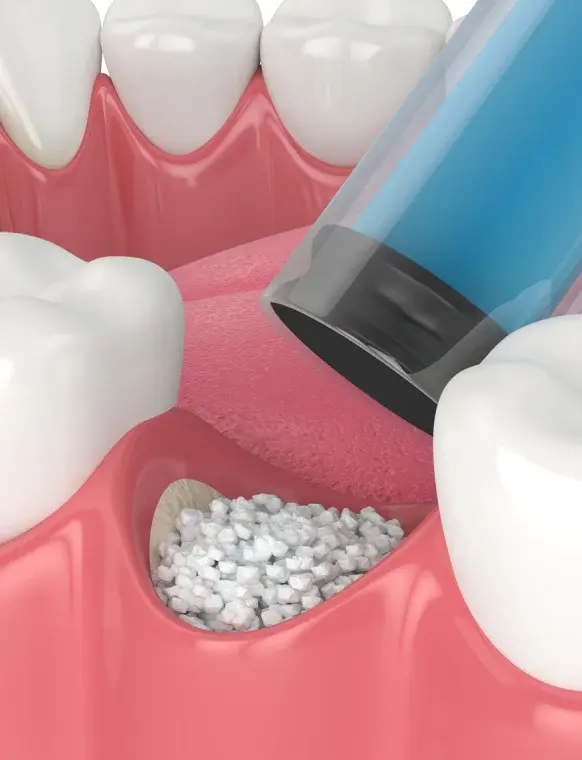
Bone grafting is the procedure that makes implants possible for these patients. By placing grafting material at the deficient site, we stimulate the growth of new bone and restore the jaw to a volume and density capable of fully supporting an implant. At Smiles of Punta Gorda, bone grafting is a routine part of our implant treatment planning process. Our team evaluates every implant candidate’s bone levels using digital X-rays and discusses whether grafting is needed before any treatment decisions are made. For patients who have been told their bone is insufficient for implants, grafting frequently opens the door to treatment that would otherwise not be possible.
Find Out if Bone Grafting Is Right for YouWhy Jawbone Loss Occurs After Tooth Loss
The jawbone is a living structure that depends on constant stimulation to maintain its density and volume. That stimulation comes from the forces transmitted through the tooth roots during everyday functions like chewing and biting. When a tooth is lost, the bone in that area no longer receives the signals it needs, and the body begins to resorb it as metabolic resources are redirected elsewhere.
This process begins within weeks of tooth loss and continues at a rate that varies by individual. Research suggests that up to 25 percent of bone width can be lost in the first year alone following an extraction, with ongoing loss continuing in the years that follow. Patients who have worn removable dentures for a long time are often significantly affected, as dentures sit on top of the gum rather than integrating with the bone and therefore provide none of the stimulation needed to preserve it.
The longer a tooth has been missing, the more bone is typically lost and the more preparation is needed before implants can be placed. This is one of the most important reasons why prompt tooth replacement following extraction is always in a patient’s long-term interest.
Types of Bone Grafts We Perform
Bone grafting at Smiles of Punta Gorda is tailored to the specific type and extent of bone loss each patient presents with. The most common grafting procedures we perform include:
- Socket Preservation Grafts – Performed immediately after extraction, socket preservation fills the empty socket with grafting material to minimize bone loss and preserve volume for future implant placement.
- Localized Bone Grafts – Used to rebuild bone in areas where bone loss has already occurred, creating sufficient volume for implant placement. Often combined with a resorbable membrane to support bone regeneration.
- Sinus Lift Grafts – When there is insufficient bone beneath the upper sinus cavities, a sinus lift raises the sinus membrane and adds grafting material to create enough bone height for implant placement.
- Block Grafts – For more significant bone loss, a block of bone harvested from another area of the mouth is secured to the deficient site with titanium screws to rebuild the necessary bone volume.
The Bone Grafting Process at Smiles of Punta Gorda
Bone grafting is a carefully planned procedure that lays the foundation for everything that follows in your implant treatment plan. Our team manages each step with precision and takes the time to ensure you are fully informed and comfortable before, during, and after the procedure.
1
Evaluation and Imaging
We begin with a comprehensive evaluation using digital X-rays to assess your bone levels and determine the type, location, and extent of grafting needed. This information shapes the entire treatment plan and helps us give you a realistic picture of the timeline and what to expect before implant placement can proceed.
2
Anesthesia and Comfort
The procedure is performed under local anesthesia so you feel no pain during the surgery. Our oral sedation options are available for patients who want additional relaxation, and our headphones are on hand if you would like to listen to music during your appointment.
3
Graft Placement
A small incision is made in the gum tissue to expose the bone at the treatment site. Grafting material is placed carefully in the deficient area and shaped to restore the required bone volume. The type of grafting material used depends on the clinical requirements of your case and will be discussed with you at your consultation.
4
Membrane Placement and Closure
A resorbable membrane is typically placed over the graft to protect it and guide new bone formation. The gum tissue is sutured closed over the graft site to keep it secure and undisturbed during the critical early healing phase.
5
Healing and Bone Maturation
New bone gradually forms and matures within the grafted area over a period of several months. We monitor your progress with periodic X-rays and will confirm when the bone has reached the density and volume needed for implant placement before moving forward.
6
Implant Placement
Once the graft has fully matured and the bone is ready, implant placement proceeds. The timeline from grafting to implant placement is typically four to six months depending on the extent of the graft and the individual patient’s healing rate.
Who Is a Good Candidate for Bone Grafting?
Bone grafting is appropriate for patients who want dental implants but have insufficient bone volume or density to support them without preparation. You may need a bone graft if you:
- Have had one or more missing teeth for an extended period without replacement
- Were told during a previous implant consultation that your bone is not adequate for implants
- Have experienced bone loss due to advanced gum disease or a dental infection
- Have worn removable dentures for a number of years and experienced the resulting bone resorption
- Require a tooth extraction and want to preserve the bone for future implant placement
- Have had a bone graft recommended as part of a comprehensive full mouth reconstruction plan
The best way to determine whether bone grafting is needed and what type would best serve your situation is through a thorough consultation and imaging evaluation at Smiles of Punta Gorda. Our team will review your bone levels honestly and explain your options clearly before any decisions are made.
Insurance and Financing for Bone Grafting
Bone grafting performed in preparation for dental implants is generally considered a clinically necessary procedure and is covered at least partially by many dental insurance plans. Coverage varies by plan, and the extent of benefits depends on the type of graft performed and the specifics of your policy. Our front office team will verify your benefits before your appointment and provide a transparent breakdown of your estimated costs.
For patients managing out-of-pocket expenses, financing through CareCredit and Cherry provides flexible monthly payment options to help make your full implant treatment plan more financially manageable.
See How We Can Help With the CostTake the Next Step Toward Dental Implants
If bone loss has been standing between you and the dental implants you need, bone grafting at Smiles of Punta Gorda may be the step that makes your treatment possible. Contact us today to schedule a consultation at our Punta Gorda, FL dental office. Our team will evaluate your bone levels thoroughly and walk you through your options with honesty and clarity.
Find Out if Bone Grafting Is Right for YouFrequently Asked Questions
About Bone Grafting
The only reliable way to know is through a professional evaluation with digital X-rays, which allows our team to assess the current height, width, and density of your jawbone at the proposed implant sites. Patients who have had missing teeth for a year or more, who have experienced bone loss from gum disease or infection, or who have worn dentures for an extended period are more likely to need grafting. If you have been told previously that your bone is not suitable for implants, a consultation at Smiles of Punta Gorda will give you a clear picture of what grafting could achieve for you.
The procedure is performed under local anesthesia so you should not feel any pain during the surgery itself. Some soreness, swelling, and minor bleeding in the days following the procedure are completely normal and can be managed with the pain relief medications our team recommends. Oral sedation is available for patients who want to feel relaxed throughout the procedure. Most patients find the recovery more comfortable than they anticipated.
The initial healing of the gum tissue over the graft site takes approximately one to two weeks. The deeper process of bone maturation, during which the graft material is gradually replaced by new living bone, takes several months. The total healing time before implant placement can proceed is typically four to six months, though this varies depending on the size and location of the graft and the individual patient’s healing rate.
Several types of bone grafting material can be used depending on the clinical requirements of the case. Autogenous bone taken from another site in your own mouth offers the highest biological compatibility and is sometimes used for larger grafts. Allograft material processed from donor bone and xenograft material processed from animal bone are also commonly used and have excellent clinical track records. Synthetic bone substitutes are available as well. Our team will discuss the most appropriate option for your situation at your consultation.
Yes, and in many cases this is the preferred approach. A socket preservation graft placed at the time of extraction minimizes the bone loss that occurs naturally during the healing period and preserves as much of the original bone volume as possible for future implant placement. Patients who know they want implants benefit significantly from socket preservation at the time of extraction, as it reduces the extent of grafting needed later and can shorten the overall treatment timeline.
A bone graft is not typically required before placing conventional removable dentures. However, patients considering implant-supported dentures will need sufficient bone to support the implants, and grafting may be part of that preparation. It is also worth noting that conventional dentures do not prevent ongoing bone resorption and in some cases accelerate it, which can make future implant treatment more complex if patients later decide to upgrade to implant-supported solutions.
Bone grafting has a high overall success rate when performed by an experienced team and when patients follow the recommended aftercare guidelines carefully. The most significant risk factor for graft failure is tobacco use, which impairs healing and bone regeneration significantly. Patients who do not smoke and who maintain good oral hygiene and attend all follow-up appointments tend to achieve excellent outcomes. Our team will discuss your individual risk factors and what you can do to maximize the success of your graft at your consultation.
Bone grafting performed as preparation for dental implants is generally considered clinically necessary and is covered at least partially by many dental insurance plans. Coverage levels and specific benefits vary by plan. Our front office team will verify your insurance before your appointment and provide a clear cost estimate. Financing through CareCredit and Cherry is available for any out-of-pocket balance.