
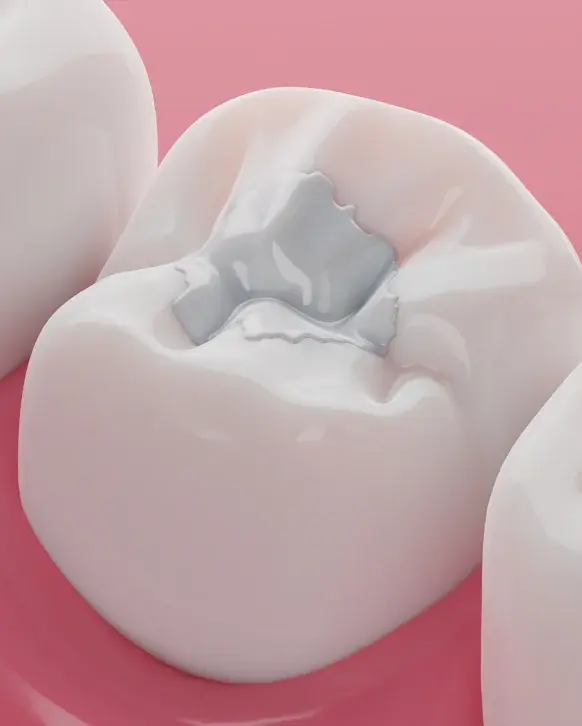
Cavity Treatment That Looks and Feels Like Your Natural Tooth
When tooth decay is caught and treated early, a composite filling is all that is needed to restore the tooth and stop the damage in its tracks. A composite filling is made from a tooth-colored resin material that bonds directly to the tooth structure, filling the space left by the removed decay and sealing the tooth against further damage. Unlike traditional silver amalgam fillings, composite resin closely matches the natural color of your teeth, making the restoration virtually invisible in everyday conversation and photography.
At Smiles of Punta Gorda, composite fillings are our standard approach to treating cavities. Beyond their aesthetic advantage, composite resin bonds chemically to the tooth, which means less healthy tooth structure needs to be removed during preparation compared to amalgam. The result is a restoration that supports the remaining tooth, restores full function, and blends naturally with your smile from the moment it is placed.
Treat Your Cavity TodayWhy Treating Cavities Promptly Matters
Tooth decay does not stop on its own. Once bacteria have penetrated the enamel and begun breaking down the inner layers of a tooth, the damage will continue to grow unless it is professionally removed and the space is sealed. A small cavity treated today with a simple composite filling can prevent the need for more involved treatment tomorrow.
Left untreated, a cavity that starts as a small area of decay can expand until it reaches the pulp of the tooth, where the nerves and blood vessels are housed. At that point, a filling is no longer sufficient and root canal therapy becomes necessary to save the tooth. In the most severe cases, a tooth that could have been saved with an early filling may need to be extracted entirely. Regular dental checkups allow our team to catch cavities at their smallest, most treatable stage, and acting promptly when decay is found is always in the best interest of the tooth’s long-term health.
Replacing Old Amalgam Fillings
Many patients who received amalgam fillings in the past choose to have them replaced with tooth-colored composite restorations. This is a common and straightforward procedure that improves the appearance of the smile while also updating older restorations that may have begun to show wear, cracking, or gaps at the margins where bacteria can re-enter the tooth.
If you have old silver fillings that you would like to replace, our team can evaluate them at your next visit and discuss whether replacement is appropriate based on their current condition. We replace amalgam fillings conservatively, removing only what is necessary and placing a well-fitted composite restoration in its place.
How Composite Fillings Are Placed
Getting a composite filling at Smiles of Punta Gorda is a straightforward single-appointment procedure that most patients find comfortable and surprisingly quick. Our team works efficiently from diagnosis through final polish, and local anesthesia ensures you feel nothing during the entire process.

1
Examination and Diagnosis
We identify cavities through a combination of visual examination and digital X-rays. X-rays are particularly important for detecting decay between teeth or beneath existing restorations that cannot be seen during a visual exam alone.
2
Numbing the Area
Before we begin, the area around the tooth is numbed with a local anesthetic so you remain comfortable throughout the procedure. Patients who experience anxiety about dental treatment can also ask about our oral sedation options to help them feel fully at ease.
3
Decay Removal
We carefully remove all decayed tooth material using precise dental instruments, leaving only healthy tooth structure behind. Removing all of the decay is essential to ensure the filling seals the tooth properly and prevents the decay from continuing to spread beneath the restoration.
4
Tooth Preparation and Bonding
The prepared tooth surface is cleaned, conditioned, and treated with a bonding agent that allows the composite resin to adhere strongly to the natural tooth structure.
5
Composite Placement and Shaping
The tooth-colored composite resin is placed in layers, with each layer hardened using a special curing light. Once the cavity is filled, we carefully shape and contour the material to match the natural anatomy of the tooth so it bites correctly and feels natural.
6
Polishing and Bite Check
The restoration is polished to a smooth finish that closely resembles natural tooth enamel. We then check your bite carefully to ensure the filling does not interfere with how your teeth come together and make any minor adjustments needed for comfort.
Insurance and Financing for Composite Fillings
Composite fillings are covered by most dental insurance plans. Some plans cover composite fillings at the same rate as amalgam, while others may cover composite resin at the amalgam rate for back teeth and pay the difference out of pocket. Our front office team will verify your specific benefits before your appointment so you have a clear understanding of your coverage and any patient responsibility before treatment begins.
For patients managing costs without insurance or with remaining balances, financing through CareCredit and Cherry is available and allows you to spread payments over time with straightforward monthly installments.
Do Not Let a Cavity Wait
A small cavity is one of the easiest dental problems to fix, but only while it is still small. Contact Smiles of Punta Gorda today to schedule an evaluation at our Punta Gorda, FL dental office. Our team will assess any areas of concern and treat them quickly and comfortably with a natural-looking composite filling before the problem has a chance to grow.
Schedule Your Filling AppointmentFrequently Asked Questions
About Composite Fillings
In the early stages, cavities often cause no noticeable symptoms, which is one of the most important reasons to attend regular dental checkups. As decay progresses, you may notice tooth sensitivity to sweet foods, cold temperatures, or pressure when biting. Visible discoloration, pitting, or a rough texture on the tooth surface can also be signs of decay. The most reliable way to detect cavities is through a combination of professional examination and digital X-rays at your routine dental visit.
The area is thoroughly numbed with a local anesthetic before we begin, so you should not feel pain during the procedure. Some patients experience mild sensitivity in the treated tooth for a few days after the filling is placed, particularly to temperature changes. This typically resolves on its own within one to two weeks. If sensitivity persists beyond that period, contact our office so we can evaluate the restoration.
With proper care, composite fillings typically last seven to ten years or longer. Factors that influence longevity include the size and location of the filling, your oral hygiene habits, your diet, and whether you grind your teeth. Fillings in high-pressure areas such as back molars may experience more wear over time. Regular dental checkups allow our team to monitor the condition of existing restorations and replace them when needed.
Yes. Modern composite resin materials are durable enough for use on both front and back teeth. For very large restorations in high-pressure molar areas, our team may discuss whether a different restoration such as a crown would provide better long-term protection. However, for most cavities including those in the back teeth, composite resin is an excellent choice that combines strength with natural appearance.
Composite fillings are hardened immediately during the procedure using a curing light, so there is no extended waiting period before you can eat. We recommend avoiding very hard, sticky, or chewy foods for the first twenty-four hours while any residual sensitivity settles. After that, most patients can return to their normal diet without restrictions.
Yes. Many patients choose to replace older amalgam fillings with composite resin for aesthetic reasons or because the old fillings are showing signs of wear or deterioration. We evaluate each filling individually to determine whether replacement is appropriate based on its current condition. If an amalgam filling is still intact and functioning well, we may recommend monitoring it rather than replacing it preemptively. When replacement is warranted, we remove the old material carefully and place a well-fitting composite restoration.
Yes. Composite resin is a well-established and clinically proven restorative material that has been used safely in dentistry for decades. It contains no mercury and bonds directly to the tooth, making it both a biocompatible and structurally supportive option for treating cavities.
Most dental insurance plans provide coverage for composite fillings. Coverage levels vary by plan, and some policies apply different benefit rates for composite versus amalgam restorations on back teeth. Our team will verify your benefits and provide a clear cost estimate before your appointment so there are no surprises. Financing through CareCredit and Cherry is available for any remaining out-of-pocket balance.